
Some translation projects are primarily technical. Others require you to slow down, listen differently, and remain aware that the words on the screen may reach someone at a particularly vulnerable point in their life.
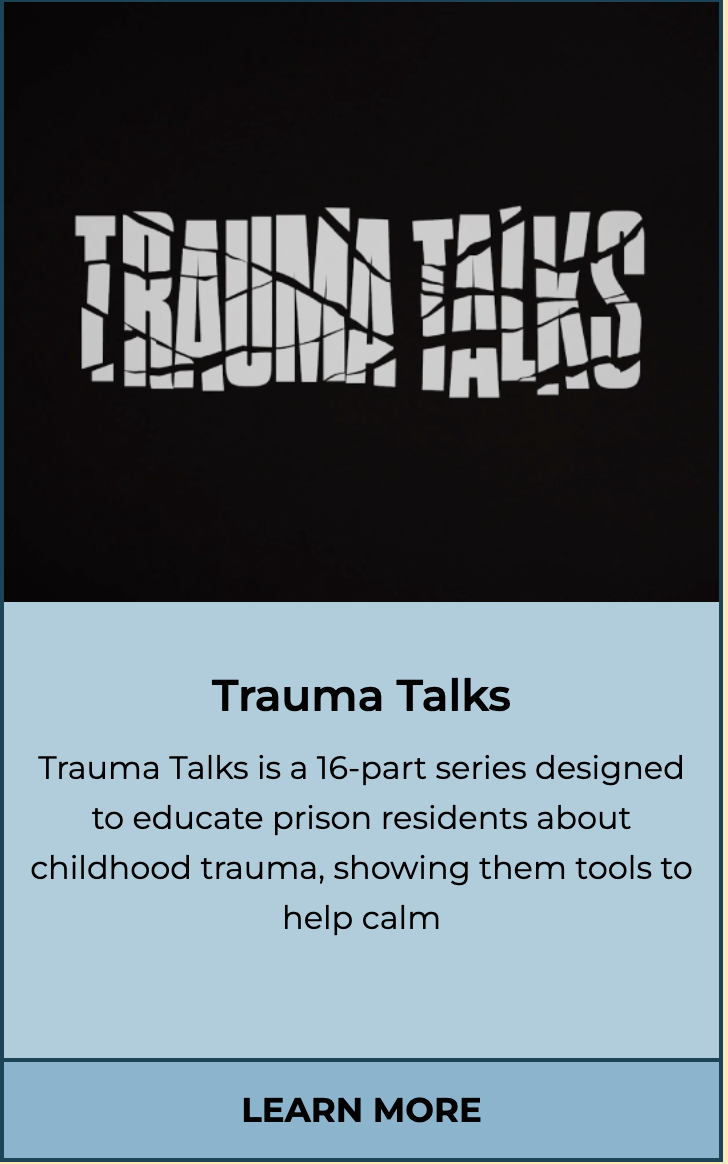
In July 2026, I completed an 8,924-word English-to-Brazilian Portuguese audiovisual translation and subtitle adaptation project through the ProZ Pro Bono programme. The content was part of Trauma Talks, a 16-part educational series developed by the Compassion Prison Project to help people in prison understand childhood trauma and its effects on their emotions, behaviour, relationships, health and life choices.
The episode I worked on focused on traumatic brain injury, a subject that sits at a difficult intersection between trauma, physical and neurological health, addiction, violence, incarceration and human behaviour.
This was not simply a matter of translating spoken English into Portuguese. It meant making complex and emotionally sensitive information accessible to an audience with very different educational backgrounds, reading abilities and personal experiences, while working within the strict spatial and timing limitations of audiovisual subtitles.
Project overview
Programme: ProZ Pro Bono
Organisation: Compassion Prison Project
Series: Trauma Talks
Episode topic: Traumatic brain injury
Language pair: English → Brazilian Portuguese
Volume: 8,924 words
Completed: July 2026
Service: Audiovisual translation and subtitle adaptation
Target format: Brazilian Portuguese subtitles
Additional work: Cultural adaptation, terminology research, subtitle segmentation, readability control, CPS and CPL control, linguistic revision and quality assurance
About Trauma Talks
Trauma Talks is a 16-part educational series created for people living in prison. It explores childhood trauma and helps participants understand how traumatic experiences can affect the nervous system, emotional regulation, thoughts, behaviour, relationships, physical health and the ability to make decisions.
The series also introduces tools and strategies intended to support resilience, accountability, self-awareness and recovery. Its subjects include adverse childhood experiences, symptoms of trauma, developmental trauma, attachment theory, traumatic brain injury, violence, shame, restorative justice, vulnerability, forgiveness and personal transformation.
This context mattered enormously during the translation. The subtitles were not being produced for passive entertainment. They were carrying information that could help someone understand, perhaps for the first time, why their body and mind react in certain ways and how trauma may have shaped parts of their life.
That responsibility changed the way every sentence had to be handled.
Translating traumatic brain injury for a real audience
The episode contained medical, neurological, psychological and trauma-related concepts, but the target language could not sound like an academic paper. The subtitles needed to remain accurate without becoming inaccessible.
People watching the programme may have different levels of literacy, education and familiarity with medical terminology. Some may also be living with cognitive difficulties connected to traumatic brain injury itself. Dense syntax, unnecessarily technical vocabulary or literal translations could therefore create a genuine barrier to understanding.
My work involved finding the balance between three requirements that do not always coexist easily:
- preserving the meaning and seriousness of the original content;
- using clear, natural and culturally appropriate Brazilian Portuguese;
- keeping each subtitle readable within the available screen time.
Simplifying language did not mean simplifying the subject or speaking down to the audience. It meant removing avoidable obstacles between the person watching and the information being communicated.
The invisible work behind subtitles
Subtitles often look simple once they appear on screen. A few words are displayed, disappear, and are replaced by the next sentence. The work behind those words is much less visible.
Spoken language does not naturally arrive in neat, self-contained units. Speakers hesitate, repeat themselves, change direction halfway through a sentence, interrupt one another and communicate through tone, rhythm and facial expression. A subtitle translator must reconstruct that spoken meaning in short written units without making the dialogue sound fragmented or artificial.
Throughout this project, I worked carefully on:
- subtitle segmentation and natural reading units;
- synchronization with the spoken content;
- characters per second and characters per line;
- reduction of unnecessary repetition without loss of meaning;
- continuity between consecutive subtitles;
- medical, neurological and trauma-related terminology;
- accessible language for a broad audience;
- cultural adaptation into Brazilian Portuguese;
- consistency of names, abbreviations and recurring concepts;
- punctuation, spelling, grammar and linguistic flow;
- the emotional weight of personal testimony.
When a subtitle is too long, the viewer is forced to choose between reading and watching. When it is shortened too aggressively, essential meaning disappears. When the language is technically correct but unnatural, the viewer feels the translation instead of hearing the person speaking.
Good subtitle adaptation should remove that friction. It should allow the audience to remain inside the testimony, explanation or conversation.
Why the ProZ Pro Bono programme matters
This project reached me through ProZ Pro Bono, an initiative that connects professional linguists with nonprofit and humanitarian projects requiring language support.
That detail is not incidental. It is central to the project.
Language access determines who can benefit from educational, humanitarian, and trauma-informed resources. Producing meaningful content is only the first step. If that content remains available in a language the intended audience cannot fully understand, its reach is automatically restricted.
Pro bono translation is still professional translation. The work requires the same research, accuracy, technical control, linguistic judgment and sense of responsibility as a paid assignment. In sensitive projects, the responsibility may be even greater because the content can touch people living through trauma, isolation, illness, incarceration or profound social vulnerability.
Contributing 8,924 words of professional audiovisual translation was my way of making specialised trauma education available to more Portuguese-speaking viewers.
It was also a reminder that translation is not merely the movement of words between languages. Sometimes it is the difference between information existing and that information actually reaching the person who may need it.
A collaborative human process
This was a collaborative project, and that dimension mattered. Audiovisual translation benefits from careful communication, revision and a willingness to question choices that may appear small but can change how a message is understood.
The work required sustained concentration because of its length, technical content and emotional intensity. It also demanded respect for the voices on screen. Personal accounts of trauma cannot be treated as interchangeable strings of text. Every subtitle has to preserve the speaker’s intention, dignity and emotional register without adding drama that is not present or sterilising the experience until it loses its human meaning.
The final Portuguese subtitles needed to sound natural, remain readable and communicate difficult information without distancing the viewer from the people speaking.
That is the kind of linguistic work I care most about: technically rigorous, almost invisible when done well, but capable of opening access to something that matters – and it wouldn’t be possible without the help, as reviewer, from my fantastic colleague Lígia Fonseca. Thank you, Lígia!
Video coming to my portfolio
Because the audiovisual material is currently subject to publication restrictions, I cannot yet display the translated video or any unauthorised excerpt on this website.
The video is expected to become eligible for portfolio publication towards the end of September 2026. Once publication is legally permitted and the necessary conditions are met, I intend to add the authorised material to this page as a practical example of my English-to-Brazilian Portuguese subtitling and audiovisual adaptation work.
Please return to this Project Journal or follow my professional updates to see the portfolio sample when it becomes available.
Until then, the project description published here contains only information that can be shared without reproducing the restricted audiovisual material.
Need professional Portuguese subtitles?
I provide professional audiovisual translation, subtitle adaptation and linguistic quality assurance for educational, documentary, humanitarian and trauma-related content.
My work includes English, French and Spanish into Portuguese, with particular attention to natural language, cultural context, terminology, timing, readability and the real audience behind every project.
If your organisation needs careful, human-led Portuguese localization for content that cannot afford to sound mechanical or disconnected from its audience, please contact me to discuss the project.




0 Comments